
This is a sneak preview -- you are seeing this page because you need to possibly
approve this content and get back to us. Have a great day!
On Monday afternoon, after most attendees had finished a heavy conference lunch, it was time for Carmen Simon to deliver her keynote. Of course, some attendees also found time to make a small detour to New Orleans' famous Bourbon Street before her keynote! You'll agree that this audience was the same, yet so different than the ones who attended Nigel Holmes' keynote that very morning!
OK, so how would Carmen hold their interest? And what was her topic?
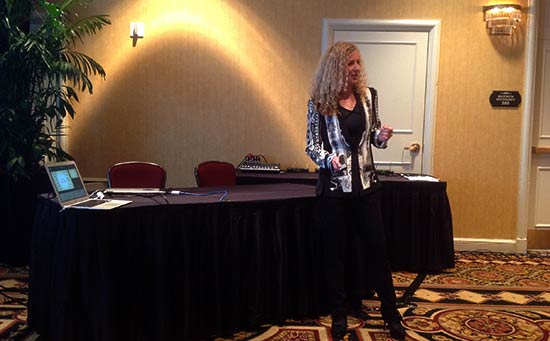
Carmen started, "For the past few years, I am asking this question from a neuro-scientific angle. Is your content remembered?"
She then elaborated further:
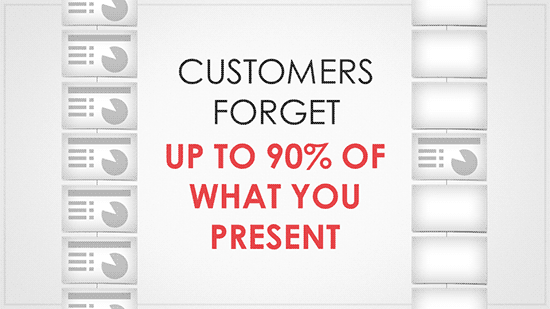
We hear a lot, keep a lot, and forget a lot.
We see things that we have seen before and wonder if we have forgotten this before!
After two days you may remember too little. And that little is something you remember for a longer time.
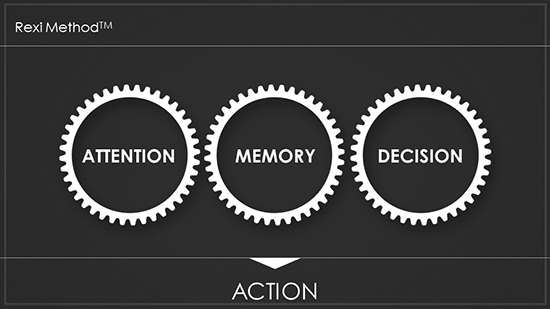
Attention: Are they attentive?
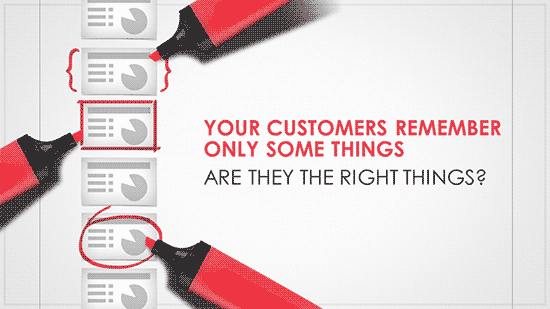
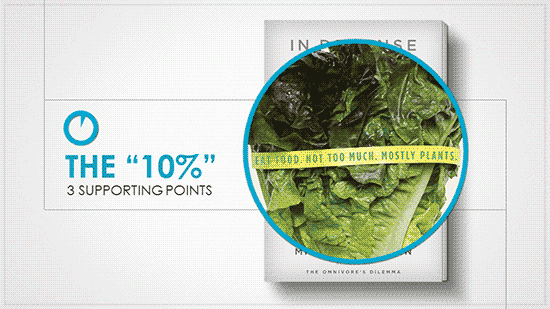
Memory: The right 10% should stay in the audience's mind
Decision: They then take action -- the decision!
Focus on attention -- attention paves the way to memory. If you hold their attention, you have found a way to their memory.
So what is it that results in loss of attention? It is Habituation, such as music in the background, meetings happening, the phone ringing, or anything that is routine.Carmen explained habituation further with a humorous example. There was this person whose job was to jump from an airplane all the time. He got so habituated to this task that he would often think about what he would eat for dinner while he was actually jumping, in mid-air!
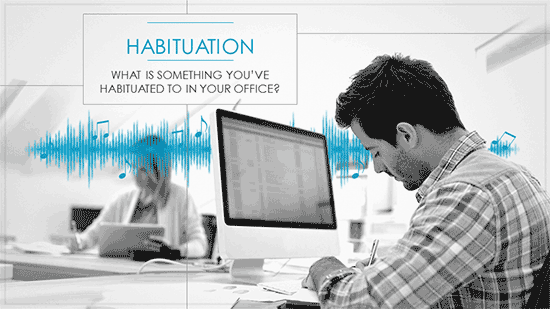
Habituation kills attention.
Humans habituate very quickly.
What is something that you're habituated to in your office?
What is something that you used to consider a treat, and now it's mundane (a norm)?
You set a level high -- and then bring it down. Then God save you!
The brain habituates very fast.Habituation is influenced by 2 factors:
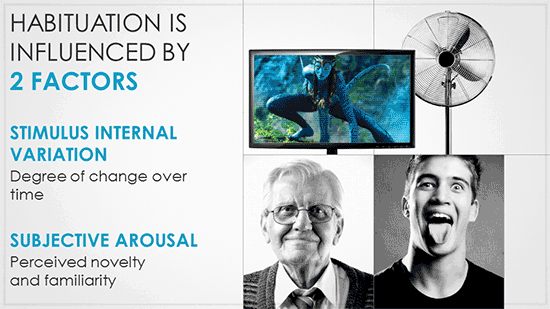
Even in the movies, shorter shots increase viewer response. In the 1930s and the 1940s, shot lengths were around 10 seconds. From 2000 onwards, they are below 4 seconds, and they also have- more motion and movement.
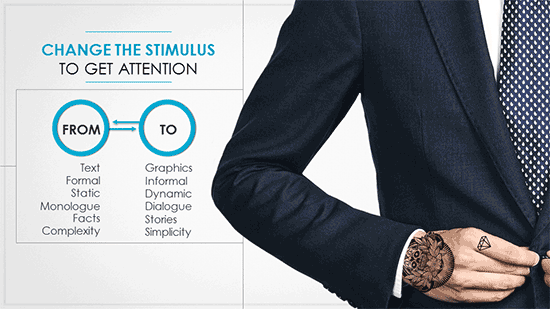
Why? Because a "cut" holds attention. Are you making it possible for people to go away? How often do you provide a "cut"?Essentially, you need to change the stimulus to get attention:
From Text to Graphics
From Formal to Informal
From Static to Dynamic
From Monologue To Dialogue
From Facts To Stories
From Complexity To Simplicity
The brain is looking to conserve energy -- that is why people may fall asleep during presentations.
And so we need to create memory traces. If you create Zen-like presentations with pictures, will people remember it at all after 2 days?
Use change to draw attention but keep your "10%" constant. Determine the 10%.Carmen then asked us to think about what happens in the brain when we habituate? She then spoke about dopamine.
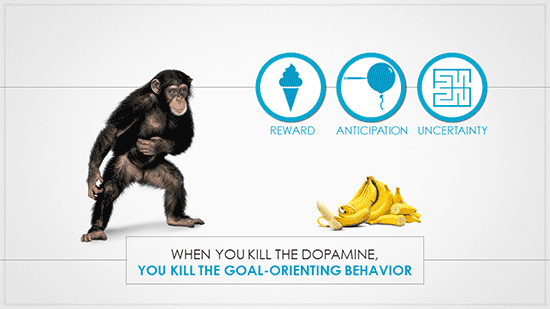
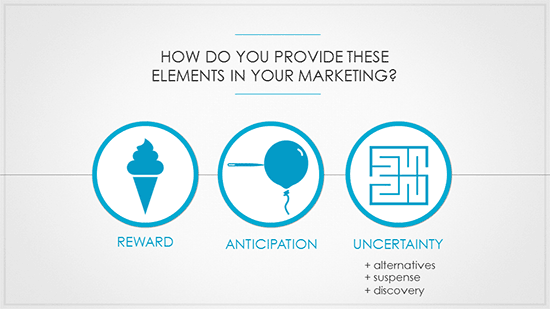
Is dopamine all about pleasure? Not necessary about pleasure, but as a way to get the craving and get a reward. Dopamine adds drive. Dopamine is related to reward. Anticipation of the reward is as strong as the reward itself. That's how Las Vegas makes a lot of money.
When you kill dopamine, you kill the behavior?
 Dr. Carmen Simon's presentations and workshops help business professionals to use communication and presentation skills to increase revenue, train or motivate others, and overall to stand out from too much sameness in the industry. A published author, Dr. Simon is frequently invited as a keynote speaker at various conferences. She is co-founder of Rexi Media, a company that helps business professionals from all fields improve their presentation skills, whether they deliver content face-to-face, online, or create on demand presentations.
Microsoft and the Office logo are trademarks or registered trademarks of Microsoft Corporation in the United States and/or other countries.